


Queer people have always existed, but it can be difficult to find well-documented queer stories and historical records. Chicago is home to one of the most prominent LGBTQ+ communities in the Midwest, going as far back as the Industrial Revolution. Chicago’s industry jobs drew many singles who lived in communal lodging areas, where people could build their own communities and create subcultures apart from mainstream, traditional lifestyles. It was common for lesbians and gender non-conforming women to “pass” as men in order to get better-paying manual labor jobs. Towertown, the neighborhood near Chicago’s famed Water Tower on the north side, became one of the original “gayborhoods” in the 1920s.
As industrialization caused noise, pollution, and an influx of working-class people, immigrants, and people of color, wealthy white residents began moving further north, which allowed their mansions to be split into affordable apartments and studios. One particular resident of Towertown has gone down in history as an early queer icon—for good reason.
EVA KOTCHEVER (A.K.A. EVE ADAMS)
Mara Lazer reported for WBEZ Chicago that Adams was a Polish Jewish immigrant who ran a literary salon in the neighborhood, selling radical publications and likely writing one of the first books of lesbian short stories, Lesbian Love. She later moved to New York and opened Eve’s Hangout, America’s earliest lesbian establishment.
“A magnet for diversity, the Tearoom was an open space for Jewish and immigrant intellectuals, who weren’t always welcome in the xenophobic cultural life of the time. Above all, it was a safe space for women, who frequently could not venture into restaurants without a male guardian, and particularly for lesbians,” Reina Gattuso explained in Atlas Obscura.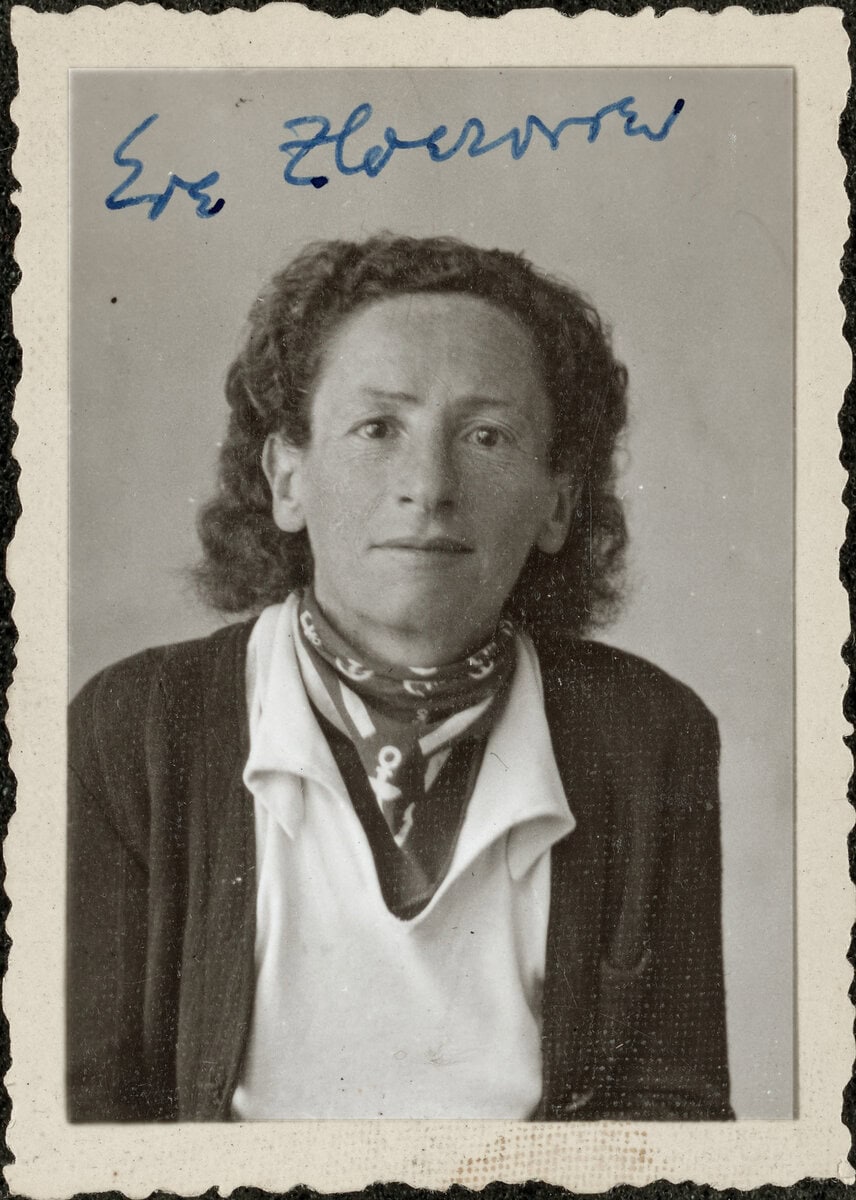

Despite her significant contributions toward community building and brave authenticity, Adams’ work came at a high cost. In 1926 she unknowingly courted an undercover police officer, who stole a copy of Lesbian Love and reported her homosexual behavior. She was later arrested for obscenity (lesbianism) and spent a year and a half in jail before being deported back to Poland.
In later years, she spent time in Paris, finding community with artists and bohemians. She began selling literature, particularly censored and banned books, like Henry Miller’s Tropic of Cancer and D.H. Lawrence’s Lady Chatterley’s Lover. Despite her success, her struggles were far from over.
“The antisemitism and homophobia that had already uprooted Adams found her again. In 1940, the Nazis marched into Paris. Like many Parisian Jews, Adams fled to southern France. She desperately sought help from friends and foreign governments, but with only an expired Polish passport and a discontinued American citizenship application, she had no luck,” Gattuso said.
Adams was captured and sent to Auschwitz, where she was killed by Nazis. Her legacy, however, remains strong.
HENRY GERBER
Another influential Chicago figure in the 1920s is German immigrant Henry Gerber, who founded the U.S.’s first gay rights organization, the Society for Human Rights. Additionally, he produced and published Friendship & Freedom, the first American publication for gay men. Although both the Society and Friendship & Freedom were short-lived due to the arrest of Gerber and several Society members, his legacy stands strong. The home where he founded the organization and wrote the publication is now a Chicago and national landmark and the Gerber/Hart LGBTQ+ Library and Archives is named in his honor. The library collects, preserves, and shares the history and culture of LGBTQ+ communities throughout Chicago and the Midwest. The organization also hosts public programs that explore and celebrate this history and culture, including exhibits, lectures, panel discussions, film screenings, and more. 
LEGAL MILESTONES
Illinois became the first state to decriminalize private, consensual homosexuality on January 1, 1962. However, police continued to raid bars and queer social spaces, arresting people for “disorderly conduct.” It wasn’t until 1988 that Chicago’s city council passed the Human Rights Ordinance, granting queer people social equity under the law and making it illegal to discriminate against LGBTQ+ people, people with disabilities, and anyone for their race, age, religion, marital status, and more.
FIND YOUR COMMUNITY
Though sometimes hard to find, queer stories are a critical part of our city’s history and culture. For more local stories, the Gerber/Hart LGBTQ+ Library and Archives have an abundance of online and physical resources. For those interested in telling their own story or hearing the stories of our local queer community, Sidetrack Chicago hosts a monthly LGBTQ+ storytelling series called OUTSpoken!.
For local resources and connections, Center on Halsted has a thriving community of support. For more information, visit www.centeronhalsted.org.
Photo Credits:
Chicago’s 16th Annual Gay & Lesbian Pride Parade, June 1985, Photo by Alan Light.
Eve Adams: Ben Reitman Papers, University of Illinois Chicago, Archives.
Eve Adams Family: Eve (center) with her brother Yerachmiel Zloczewer and sister Tobe in Poland, 1925. Source The Daring Life and Dangerous Times of Eve Adams, Copyright Jonathan Ned Katz, Chicago Review Press.
Henry Gerber: Chicago LGBT Hall of Fame.